
About Vesperia Group
Built from practical work, not theory.
How it started
Vesperia Group was created to help small businesses make better decisions, build steadier systems, and move forward with more confidence.
Before it became a company, Vesperia started as a working partnership. We were looking closely at the real challenges owner-operated businesses face every day: too much information scattered across too many places, inconsistent follow-up, unclear processes, missed opportunities, and growing pressure on owners to manage everything themselves.
What we found was simple: most small businesses do not need more noise. They need clearer thinking, better structure, and practical help turning good ideas into working habits. That is where Vesperia fits.
We help business owners step back from the day-to-day pressure, understand what is actually happening inside the business, and identify the few changes that will make the biggest difference. AI is part of our work, but it is not the whole story. We see it as one tool among many — useful when it fits the work, a distraction when it does not.
"Most small businesses do not need more noise. They need clearer thinking and practical help turning good ideas into working habits."
Vesperia Group
Our story
Vesperia Group was founded by Jerry Phan and Ashley — former teammates at D2L who shared a common interest in how people, systems, and technology come together in real organizations.
At D2L, we worked in an environment focused on learning, adoption, client needs, and the role technology can play in helping people do better work. That experience shaped how we think: tools matter, but only when they are connected to real people, real workflows, and real outcomes.
After D2L, our conversations kept returning to the same idea. Small businesses were being told they needed to "use AI" or "digitally transform," but many did not have the time, structure, or support to figure out what that actually meant for their business.
Vesperia grew from that gap. Our work is grounded in the belief that small businesses deserve practical advisory support: clear language, careful diagnosis, useful recommendations, and steady help turning plans into action.
What we've been building
Real systems, real clients, real problems.
Our advisory work is grounded in hands-on implementation. We have built and refined systems across a range of small business contexts.
Sales Operations
Lead intake and follow-up systems
Intake forms, CRM structure, follow-up sequences, and handoff processes designed to reduce missed leads and inconsistent outreach.
Marketing
Google Ads and landing page refinement
Campaign structure review, audience targeting, landing page alignment, and conversion-focused copy adjustments for SMB clients.
Automation
Apps Script and Sheets workflows
Spreadsheet-based automation to reduce manual data entry, improve reporting, and keep small teams operating on accurate information.
Communication
Twilio, Square, and Gmail integration
SMS follow-up, payment confirmation, appointment reminders, and triggered email workflows that handle routine communication without manual effort.
AI-Assisted Development
GitHub and Claude Code implementation
Using modern AI-assisted development tools to build, test, and iterate on client-facing systems — including intake tools, automations, and this site.
Practical AI Education
AI literacy and book workflow
A structured approach to helping business owners understand what AI can and cannot do — grounded in real examples and applied to their actual workflows.
The team

Ashley Duncan
Operations · Media & Creativity · Learning & Development
Ashley brings a strong background in learning, operations, adoption, and client support. Her experience includes work in media and advertising in the automotive sector, as well as nearly a decade in education technology at D2L — working with organizations navigating complex systems, changing needs, and the human side of technology adoption.
Ashley brings a passion for creativity and out-of-the-box thinking. She understands that better tools only matter when people can understand them, trust them, and use them consistently. At Vesperia, she helps ground the work in clear communication, thoughtful implementation, and a strong understanding of how people learn and adapt.
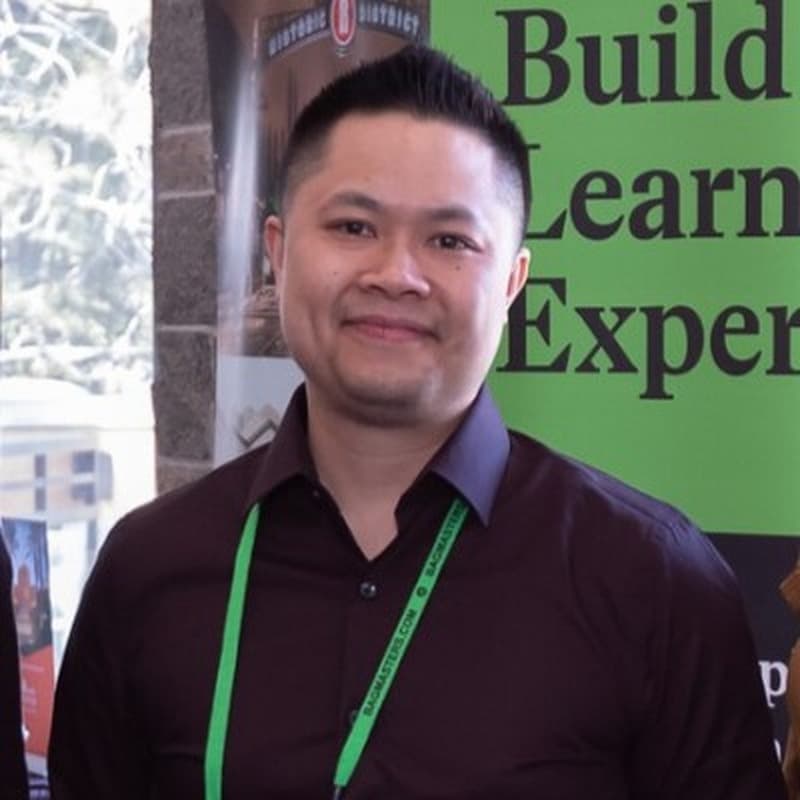
Jerry Phan
Operations · Business Development · Retail & SMB
Jerry brings a practical, operator-minded approach to business advisory. His background spans retail leadership, business development, client sales, education technology, and hands-on work with small-business owners. Across those experiences, he has developed a strong interest in how businesses actually run: how leads are handled, how customers move through a process, how decisions are made, where owners lose time, and where small improvements can create meaningful stability.
His work focuses on helping business owners see the real problem more clearly and build a practical path forward — simplifying complexity, improving follow-through, and helping small teams use modern tools, including AI, in ways that are useful rather than overwhelming.
BCom, Business Administration & Economics — University of Windsor
From Pressure to Direction
The pressures we clear away
Missed leads
Inquiries that fall through the cracks
Scattered tools
Data living in six different places
Unclear follow-up
No consistent next step for prospects

Vesperia Group
Turns scattered pressure into clear, workable direction.
Owner bottleneck
Every decision waiting on one person
Manual admin
Hours spent on work that should run itself
AI confusion
Pressure to adopt tools without a clear why
Missed leads
Inquiries that fall through the cracks
Scattered tools
Data living in six different places
Unclear follow-up
No consistent next step for prospects
Owner bottleneck
Every decision waiting on one person
Manual admin
Hours spent on work that should run itself
AI confusion
Pressure to adopt tools without a clear why
Vesperia Group
Turns scattered pressure into clear, workable direction.

Principles
Stability.
We help businesses find footing — in their processes, their decisions, and their operations. Stability is not about standing still. It is about having a foundation solid enough to move from.
Clarity.
Most business problems are visibility problems. When owners and teams can see what is actually happening — in the numbers, the workflows, the handoffs — better decisions follow.
Direction.
Clarity without action is just analysis. We help translate what we learn into practical priorities: what to fix first, what to defer, and what to build toward.